Publications
2026

Free Lunch for Stabilizing Rectified Flow Inversion
ICLR 2026 (The Fourteenth International Conference on Learning Representations)
We develop two plug-and-play velocity correction methods to improve inversion stability and editing fidelity in flow-based generative models. Achieved state-of-the-art results on PIE-Bench.
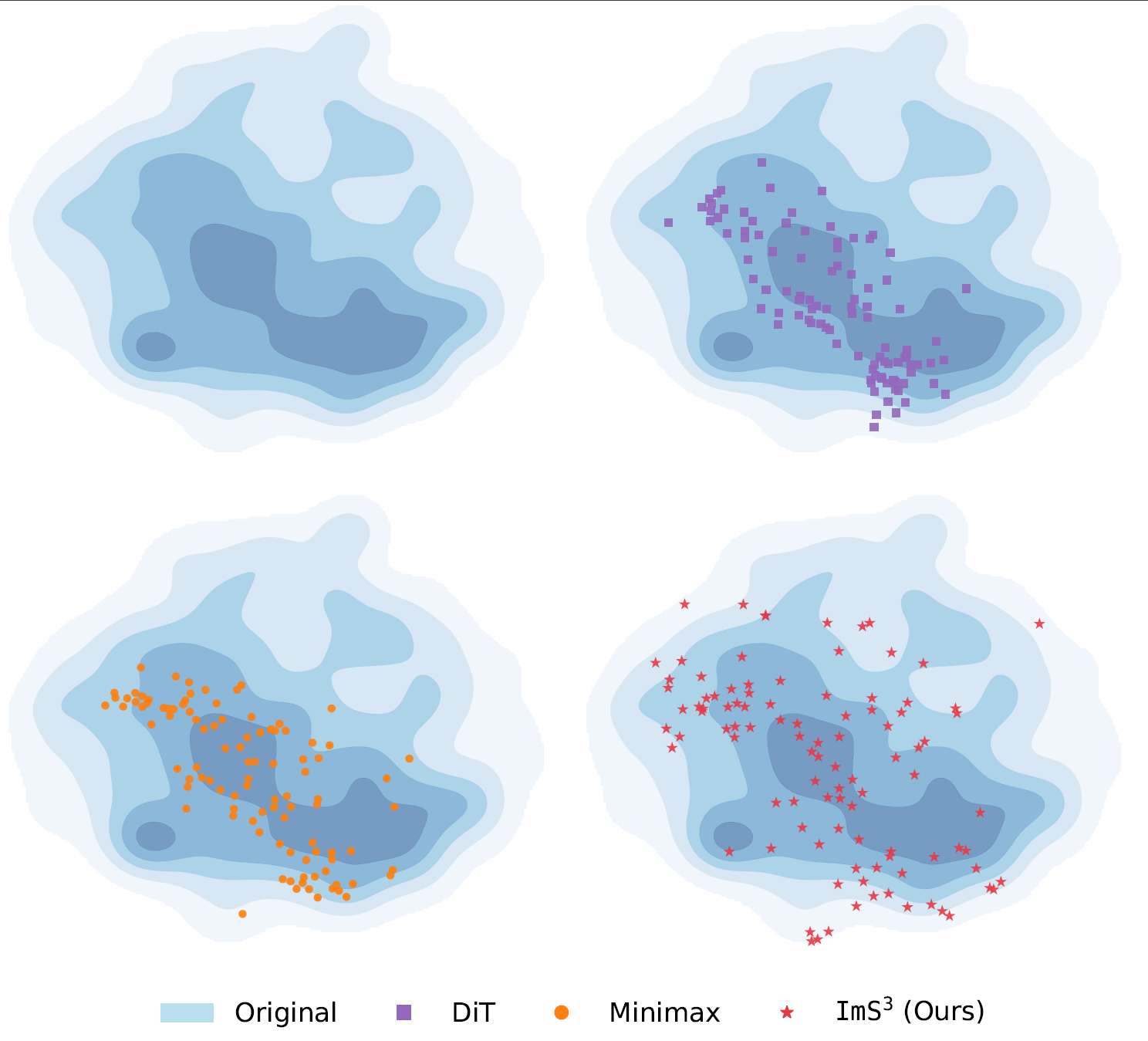
IMS3: Breaking Distributional Aggregation in Diffusion-Based Dataset Distillation
CVPR 2026 (IEEE/CVF Conference on Computer Vision and Pattern Recognition)
We develop an inversion-based fine-tuning method for dataset distillation and dataset generation, along with a cluster-based group sampling method for distilled data sampling.
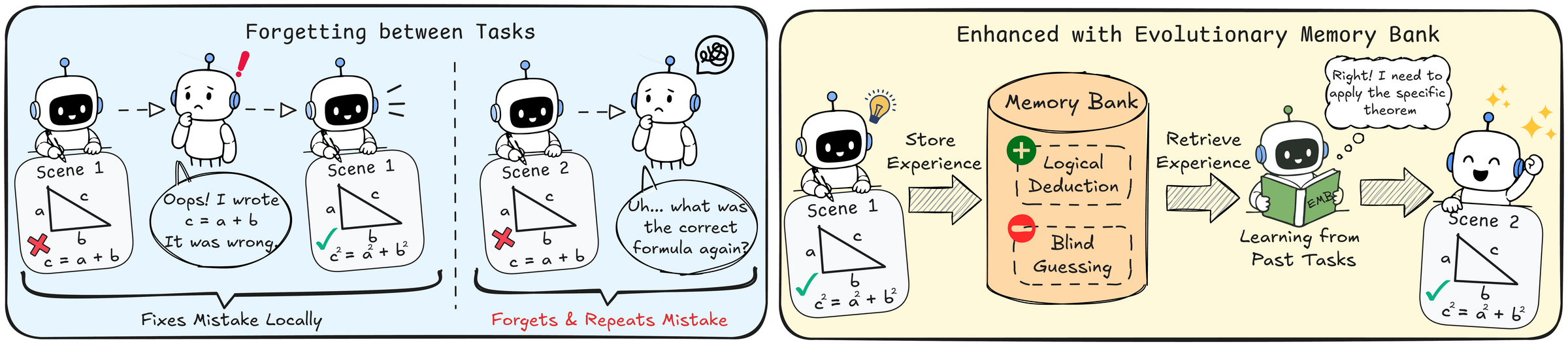
ManimAgent: Self-Evolving Multimodal Agents for Visual Education
EMNLP 2026 (The 2026 Conference on Empirical Methods in Natural Language Processing)
ManimAgent carries reflection experience across tasks through a self-grown, dual-channel Episodic Memory Bank. It retains successful visual-education patterns and validated failure lessons without weight updates or human-seeded examples.
ScoutSampler: RL-Driven Active Keyframe Exploration for Long Video Understanding
Preprint, 2026
MGPO: Manifold-Guided Diffusion Alignment for Task-Aware Dataset Distillation
Preprint, 2026
2025
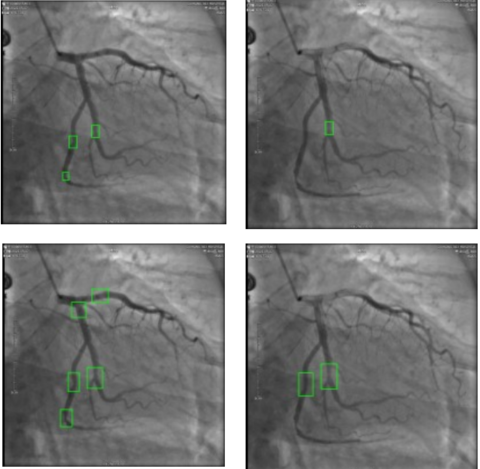
DDUM: Deformable Dilated U-structure Module for Coronary Stenosis Detection
Medical Engineering & Physics, 2025
We apply deep learning techniques to assist physicians in diagnosing coronary artery disease. We propose the Deformable Dilatable U-structure Module to specialize generic networks for coronary stenosis detection and improve their generalization ability. We also construct the 302 dataset for evaluation in real-world clinical scenarios.